Trump rejects Iran’s seven-day roadmap to end war and reopen Hormuz
Tehran says it is awaiting an official response through mediators and that it will not back down from its conditions.
Araghchi ignores Trump, waits for mediators’ response on Hormuz

United States President Donald Trump has rejected a plan submitted by Iran to reopen the Strait of Hormuz within seven days, as Tehran continued to insist that only diplomacy can solve the conflict between the two countries.
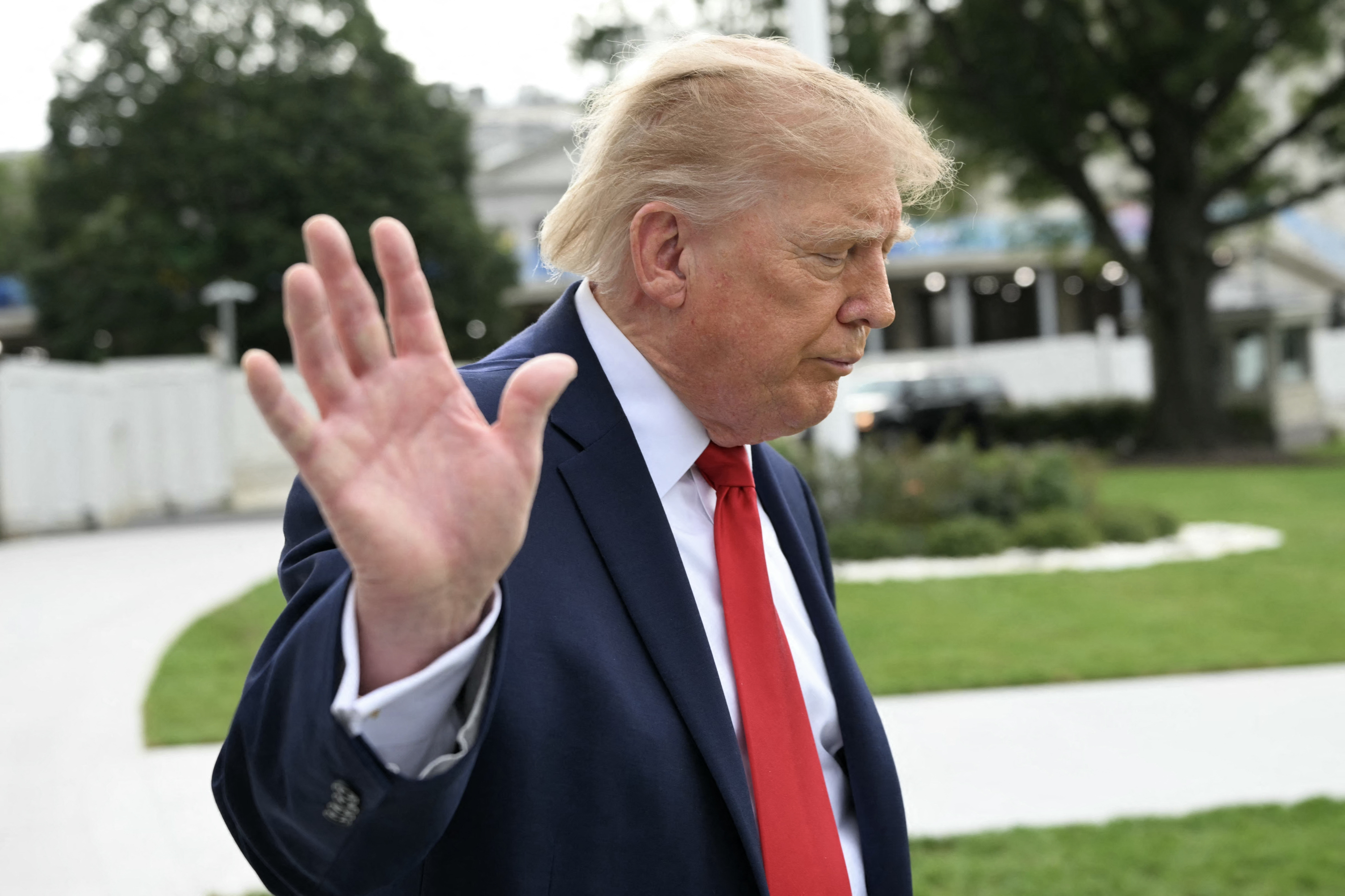
Speaking to reporters at the White House, Trump said on Saturday that Iran wants to make a deal to open the vital maritime corridor immediately only “because they are losing so badly”.
Recommended Stories
list of 3 items- list 1 of 3Pezeshkian says Iran ‘no longer trusts talks with Washington’
- list 2 of 3US official claims Trump holds all the cards in Iran talks
- list 3 of 3Trump ‘rejects’ Iran’s seven-day ceasefire proposal. What’s next?
“They want to make a deal, and I think that’s fine. I’d like to make a deal, too,” he said. But the proposal put forth by Iran “would not be acceptable,” he said.
The plan by Iran, announced on Friday at the United Nations General Assembly, calls for the US to release frozen Iranian funds, lift oil sanctions and end its naval blockade on Iranian ports.
Abbas Araghchi, Iran’s foreign minister, said at the time that those steps could be completed within four or five days, clearing the way for the strait to reopen and for negotiations on a final agreement to begin by the seventh day.
Araghchi responded to Trump’s rejection in a post on his Telegram channel on Saturday, saying Iran “will not back down” on its conditions.
“We have seen the first reaction from the US president, but nothing has been conveyed to us from the mediators yet,” Araghchi wrote, adding that Trump had a history of making “contradictory” statements.
He said Iran was “waiting for the definitive opinions to be conveyed to us by the mediators” and would “make a decision based on that”. He added that “only a negotiated solution” can get the US “out of this deadlock”.
‘Never-ending war’
US officials had signalled on Friday that Trump would reject the proposal. The Wall Street Journal, citing unnamed US officials, reported that Trump was “privately sceptical” that Tehran would meet his demands. He reportedly told aides that he expects a renewed bombing campaign on Iran after the US midterm elections in November.
Al Jazeera’s Mike Hanna, reporting from Washington, DC, said the Iranian proposal appears “dead in the water”. But he noted Trump has offered no alternative.
“The one thing that has been made clear by President Trump is that he is content to stay in the status of limbo,” Hanna said, “despite concerns from much of the American public that the Iran conflict is turning into another ‘never-ending war’.”
Iran closed the Strait of Hormuz, a waterway critical to global oil supplies, shortly after the US and Israel launched their war on February 28. Iranian attacks on vessels in the waterway have since sharply curtailed shipping.
The US has responded with an economic blockade on Iran and threats of secondary sanctions against airports and companies doing business with Iranian airlines – measures that have already prompted the United Arab Emirates, Iraq and Oman to cancel flights.
Earlier in the week, Araghchi met with Steve Witkoff, Trump’s envoy, to lay out conditions for ending the war, which would also include waiving oil sanctions and establishing a regional ceasefire covering Lebanon and Yemen.
‘No trust in the American side’
Iran’s President Masoud Pezeshkian, who was also in New York for the UNGA, said on Saturday that Tehran no longer trusted negotiations with Washington, citing past rounds of talks that were followed by military strikes and new sanctions.
“We have no trust in the American side and do not know on what basis an understanding can be reached with it,” Pezeshkian told Al Jazeera.
He denied that Iran bore responsibility for the closure of the strait, saying the US had “closed the routes before us”. He said the waterway would reopen to commercial shipping if negotiations succeeded in ending the war.
Ross Harrison, a senior fellow at the Middle East Institute, said Iran’s proposal was intended chiefly as a gesture of goodwill.
“I think they are trying to show the willingness to talk and negotiate,” he told Al Jazeera. “That’s what’s important for their home audience back in Iran, and it’s also important for the American public.”
Harrison said Iran’s leaders likely anticipated Trump’s rejection, since the proposal closely mirrored the now failed memorandum of understanding signed in June that Tehran believes Washington had undermined.
“I don’t think they were surprised at all” by Trump’s move, he said.
