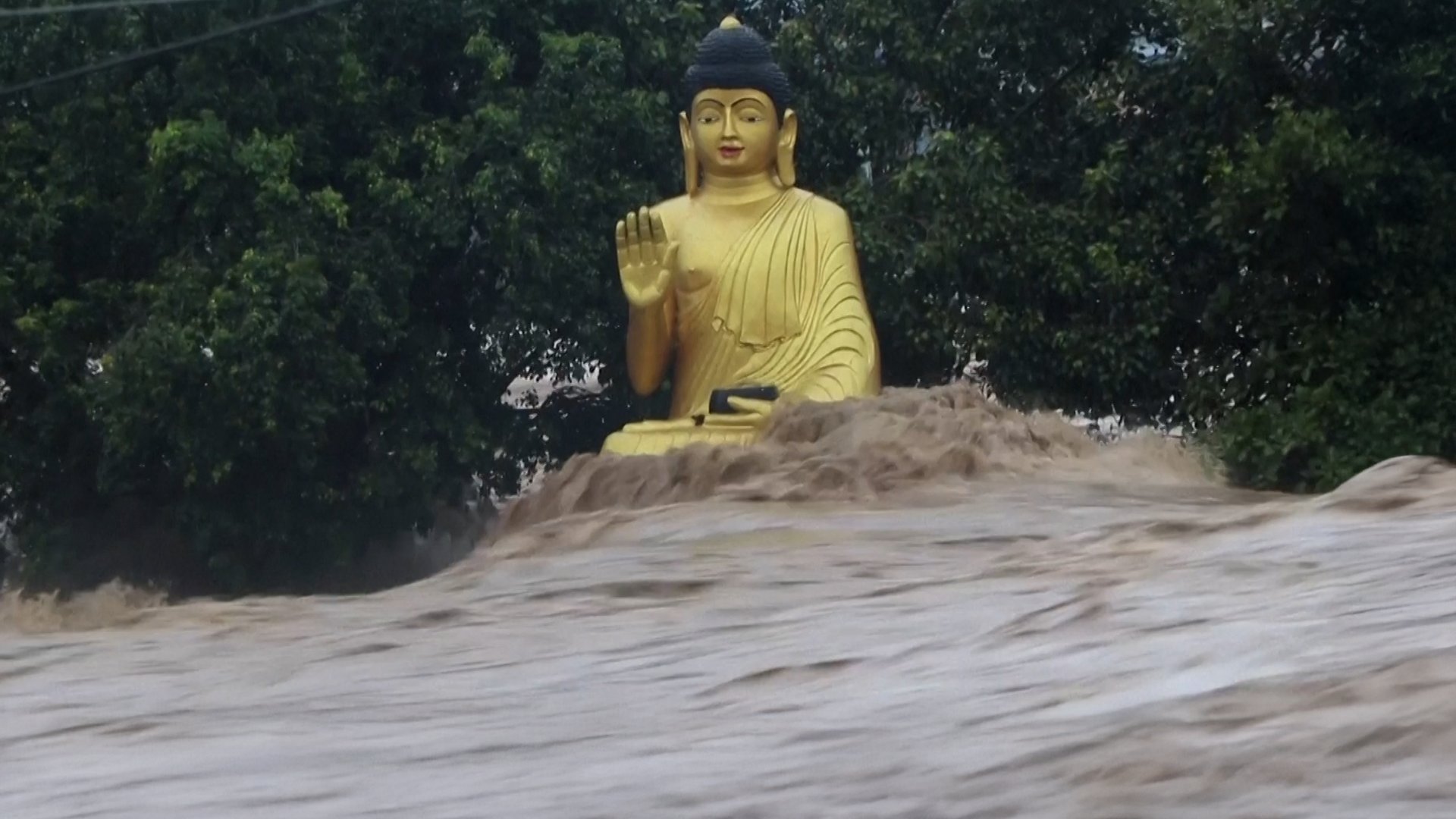
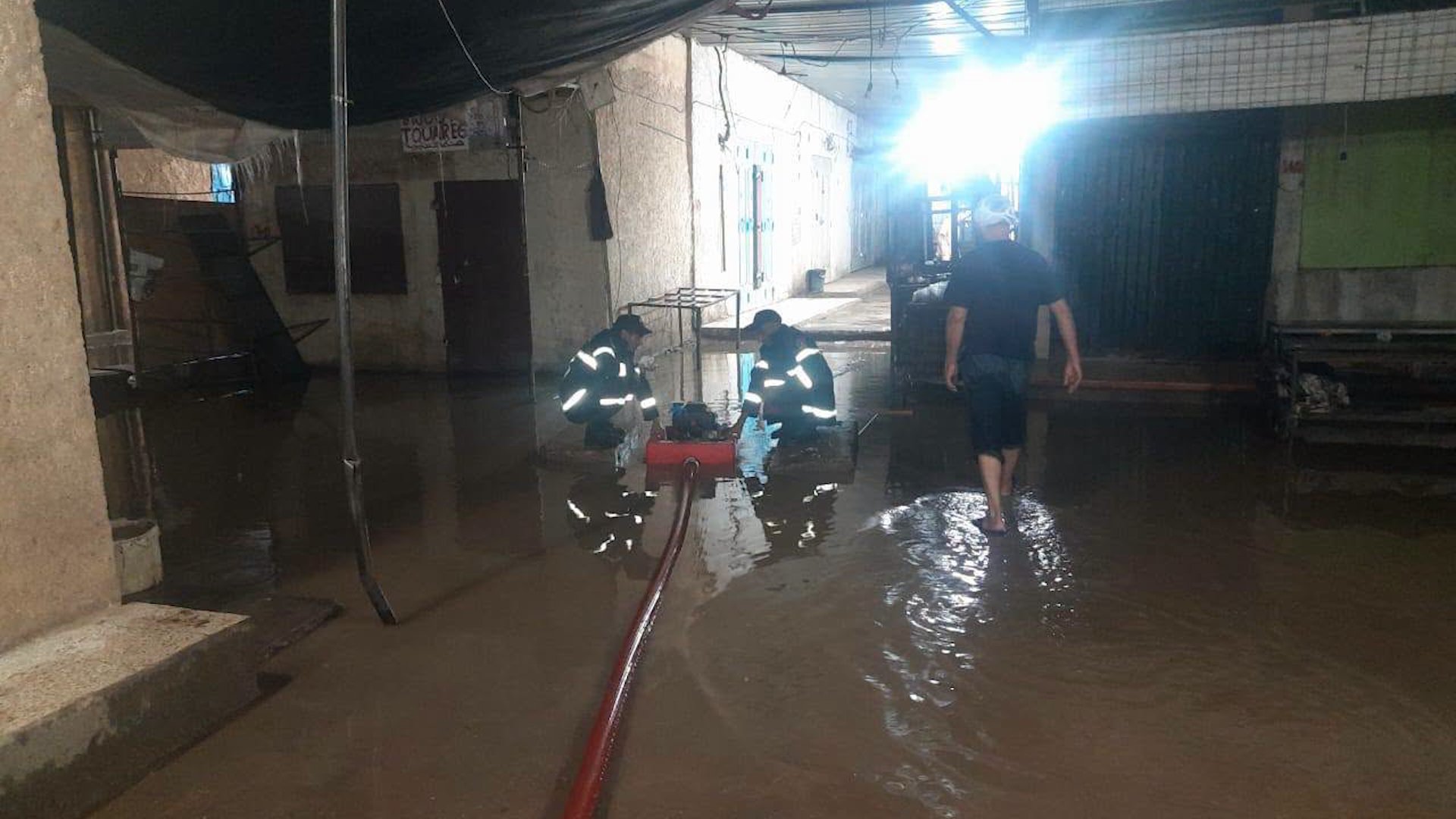
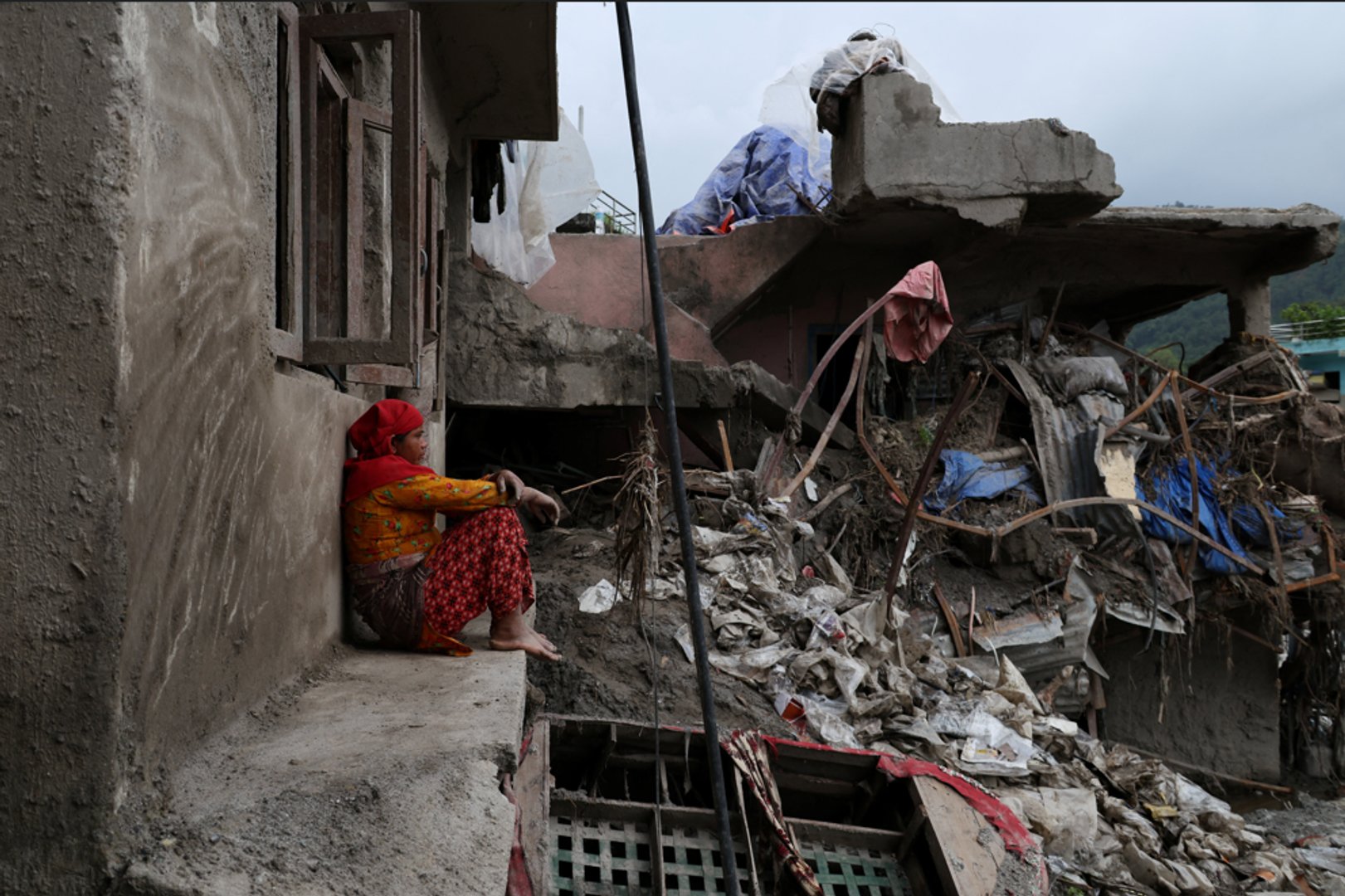
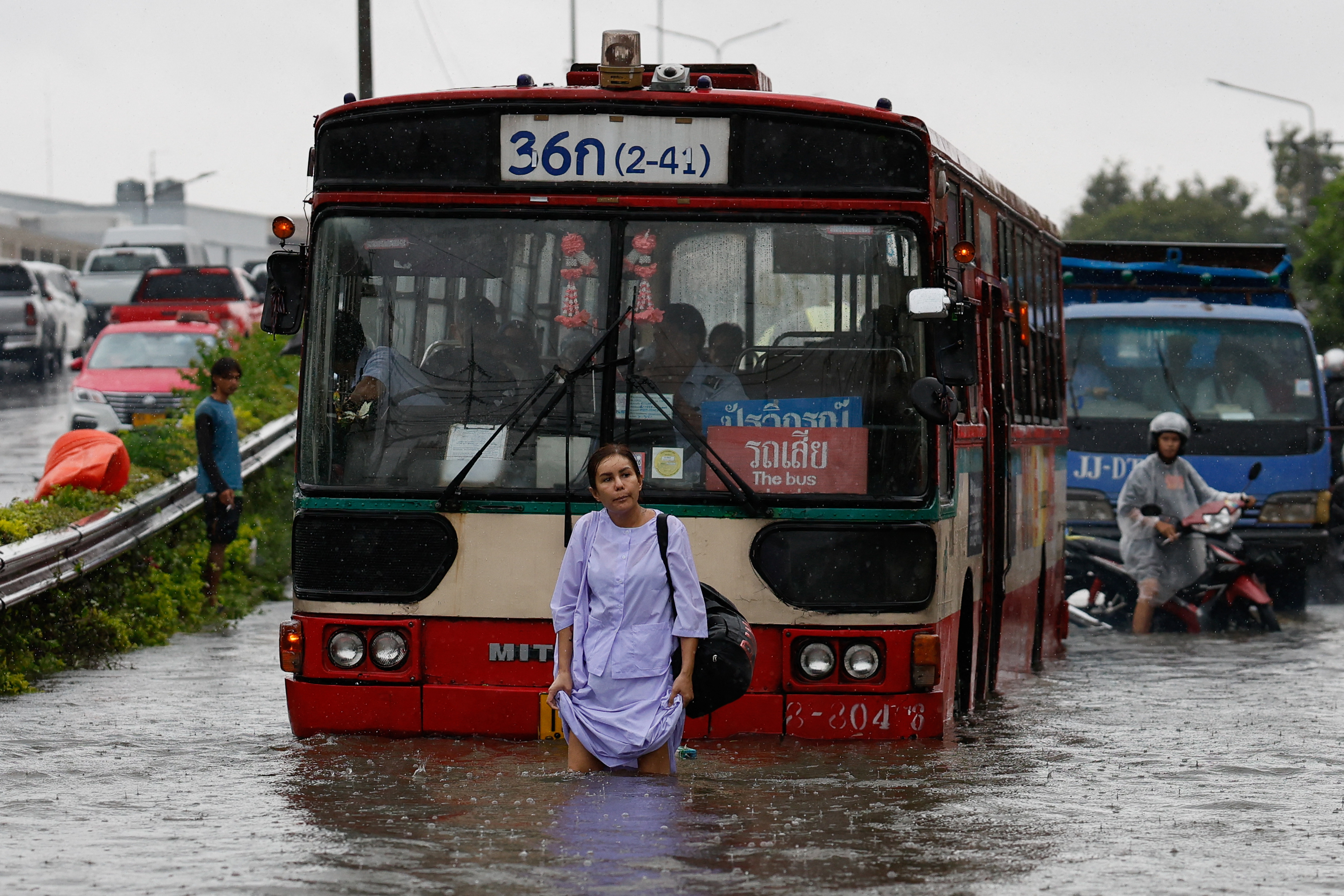
Floods and landslides kill at least 18 in Kenya
Ongoing rains are causing floods and landslides in the East African nation.

Ongoing rains are causing floods and landslides in the East African nation.


We explore why water infrastructure is increasingly being targeted in the midst of war and conflict.
![Hawa Moalim, 33, fled Wajid in the Bakool region after the drought destroyed her livelihood. She began the journey to Baidoa with her six children and the few goats that had survived, determined to give her family a chance. One by one, the animals died on the road. By the time the family arrived at Wayamo displacement camp two weeks ago, they had nothing left. "We arrived here hoping for help," she says. "But since we came, we have received nothing. There is no food, no water, and no proper shelter." Wayamo displacement camp, Baidoa, Southwest State, Somalia. [Abdulkadir Mohamed/NRC]](https://aljazeeranews.edgeone.app/wp-content/uploads/2026/04/RS34781_DSC09322-1777276775.jpg?resize=570%2C380&quality=80)
![Anab Siyad, 62, stands with the few goats she has left. Once a pastoralist with a much larger herd, most of her animals have died as the rains failed and water sources dried up across the region. The remaining animals struggle to survive in a dry and barren landscape. For Anab, these few goats represent the last thread of a livelihood that has been unravelling for years. Near Dollow, Gedo region, Somalia. [Abdulkadir Mohamed/NRC]](https://aljazeeranews.edgeone.app/wp-content/uploads/2026/04/RS34780_DSC093412-1777276768.jpg?resize=570%2C380&quality=80)
![Fatima Adan, 49, is one of the newly arrived families at Qaydar-adde camp. When the rains failed and her animals began to die in the Bakool region, she and her family loaded what they could onto a donkey cart and spent days on the road with little food or water before finally reaching Baidoa. At the camp, access to food, safe water, and healthcare remains critically limited. Humanitarian assistance has been scarce as funding continues to fall short of the $852 million requested for Somalia in 2026 (OCHA). Qaydar-adde displacement camp, Baidoa, Southwest State, Somalia. [Abdulkadir Mohamed/NRC]](https://aljazeeranews.edgeone.app/wp-content/uploads/2026/04/RS34777_DSC09332-1777276749.jpg?resize=570%2C380&quality=80)
![Water sources across rural Somalia have dried up as the drought continues to deepen. Communities are forced to walk for hours in search of water for their families and for the livestock that sustain them. Without water, the last herds die. Without herds, there is nothing left to sell, nothing to eat, and no reason to stay. Bay region, Somalia. [Abdulkadir Mohamed/NRC]](https://aljazeeranews.edgeone.app/wp-content/uploads/2026/04/RS34778_DSC09348-1777276754.jpg?resize=570%2C380&quality=80)
![Muslima Hussein, 68, was displaced from the Bakool region after the drought turned her farm barren and killed her livestock. At her age, the journey on foot alongside her daughter took days. The relief she expected in Baidoa has not come. She now lives at Wayamo camp without proper shelter, food, or support. "Before the drought, we had livestock and a farm," she says. "Everything changed when we missed the rains. Now we have nothing." Her greatest concern is her grandchildren. "My grandchildren always cry for food, and I cannot help them." Wayamo displacement camp, Baidoa, Southwest State, Somalia. [Abdulkadir Mohamed/NRC]](https://aljazeeranews.edgeone.app/wp-content/uploads/2026/04/RS34773_DSC09281-1777276727.jpg?resize=570%2C380&quality=80)
![Hawa Ali Abdi is a 13 year old young girl displaced by drought, lives with her family in Kabasa camp in Dollow. Each day she walks long distances to collect water from the nearest water point, a journey that takes hours under the scorching sun. Like many displaced children in Somalia's camps, her education has been suspended. Survival has taken the place of school. Kabasa camp, Dollow, Gedo region, Somalia. [Abdulkadir Mohamed/NRC]](https://aljazeeranews.edgeone.app/wp-content/uploads/2026/04/RS34763_DSC08519-1777277178.jpg?resize=570%2C380&quality=80)
![Farhiya Abdullahi Derow, 20, fled El Berde after losing all her livestock, her main source of income. Her husband disappeared during the crisis and she still does not know his whereabouts. On the journey to Baidoa, she and her children survived by stopping along the road to eat wild roots. She arrived at Qaydar-adde camp exhausted and with nothing. "We need food, my children have nothing to eat," she says. "I go out to beg just to feed my children." Qaydar-adde displacement camp, Baidoa, Southwest State, Somalia. [Abdulkadir Mohamed/NRC]](https://aljazeeranews.edgeone.app/wp-content/uploads/2026/04/RS34764_DSC08931-1777277186.jpg?resize=570%2C380&quality=80)
![Mohamed Ganey is 63 years old, disabled, and living with high blood pressure. When drought destroyed his family's livestock in the Bakool region, he was too weak to walk. His children carried him on a donkey cart for several days with little food or water before reaching Baidoa. At the displacement camp, he has no access to food and cannot afford the medicine he needs. He spends most of his time lying in a temporary shelter, waiting for his children to return. Some days, they come back with nothing. Baidoa, Southwest State, Somalia. [Abdulkadir Mohamed/NRC]](https://aljazeeranews.edgeone.app/wp-content/uploads/2026/04/RS34779_DSC09340-1777276761.jpg?resize=570%2C380&quality=80)
![Habiba Abdi Nishow, 43 years old, made a long journey from the Bakool region and arrived at Wayamo camp hoping to receive humanitarian assistance. She has received none. "We lost everything," she explains. "I had a farm and a herd of goats, but the goats died and the crops failed after the rains didn't come." Humanitarian organisations across Somalia are struggling to respond as funding cuts reduce the scale of the response. Wayamo displacement camp, Baidoa, Southwest State, Somalia. [Abdulkadir Mohamed/NRC]](https://aljazeeranews.edgeone.app/wp-content/uploads/2026/04/RS34765_DSC09192-1777276683.jpg?resize=570%2C380&quality=80)
![Shukri Adan Hassan, 23, and her six children fled Wajid after losing all their livestock in the September drought and arrived in Baidoa seeking refuge. She is building a temporary shelter at Qaydar-adde camp with whatever materials she can find. Since arriving, the family has not received any humanitarian assistance. Qaydar-adde displacement camp, Baidoa, Southwest State, Somalia. [Abdulkadir Mohamed/NRC]](https://aljazeeranews.edgeone.app/wp-content/uploads/2026/04/RS34770_DSC08912-1777276713.jpg?resize=570%2C380&quality=80)
![Farhia Isack is 28 and was displaced from the Bay region after the prolonged drought wiped out her rainfed farm and her livestock. Since arriving in Baidoa with her five children, she has received no income and no humanitarian assistance. Determined to keep her children alive, she walks to the outskirts of the city each day to collect branches from the Acacia tree, which she processes into a crude form of broth; the family's only source of nourishment. "I walk long distances under the sun just to find these trees," she says. "My children cry from hunger, and I have no answer for them. I am doing everything I can, but I cannot do this alone." Baidoa, Southwest State, Somalia. [Abdulkadir Mohamed/NRC]](https://aljazeeranews.edgeone.app/wp-content/uploads/2026/04/RS34768_DSC09220-1777276705.jpg?resize=570%2C380&quality=80)
![Newly arrived families at Wayamo displacement camp construct temporary shelters from plastic sheets, sticks, and scraps of cloth. The structures offer minimal protection from the intense heat and provide almost no privacy or safety. Qaydar-adde camp in Baidoa is one of the main destinations for families fleeing drought from the Bay and Bakool regions, but the growing number of arrivals has pushed already limited resources to breaking point. Access to safe water, sanitation, and healthcare is critically inadequate. Wayamo displacement camp, Baidoa, Southwest State, Somalia. [Abdulkadir Mohamed/NRC]](https://aljazeeranews.edgeone.app/wp-content/uploads/2026/04/RS34774_DSC09247-1777276735.jpg?resize=570%2C380&quality=80)
![Hassan Adan is 47 years old and has been living at Wayamo camp in Baidoa for three months, after fleeing the Bakool region when drought destroyed his pastoral livelihood. Every morning he wakes before sunrise and walks to the Baidoa meat market, not to buy food, but to collect the goat legs that butchers discard. On days he finds nothing, his children go to sleep hungry. "It breaks me to feed my children what others throw away," he says. "But I have no choice. This is the only way I can keep them alive." Wayamo displacement camp, Baidoa, Southwest State, Somalia. [Abdulkadir Mohamed/NRC]](https://aljazeeranews.edgeone.app/wp-content/uploads/2026/04/RS34771_DSC09244-1777276718.jpg?resize=570%2C380&quality=80)
![Shamsa Abdiwahab is 27 years old mother of seven, fled her home after drought destroyed the family's livelihood and sought refuge at a displacement camp in Dollow. With almost no access to food, the family survives on a single meal a day. "When my six-month-old baby cries because there is little milk," she says, "that is my most painful moment." Dollow, Gedo region, Somalia. [Abdulkadir Mohamed/NRC]](https://aljazeeranews.edgeone.app/wp-content/uploads/2026/04/RS34767_DSC08516-1777276698.jpg?resize=570%2C380&quality=80)
![Ibrahim Ebdow, 83, is an elderly man with no children, fled the Bakool region alongside neighbours after losing more than 40 goats to the drought: his entire livelihood. With no family to support him, he had no choice but to leave. He now depends on the kindness of others to survive each day at Wayamo camp. "I lost everything," he says. "I only hope for some help to survive and live with dignity." Wayamo displacement camp, Baidoa, Southwest State, Somalia. [Abdulkadir Mohamed/NRC]](https://aljazeeranews.edgeone.app/wp-content/uploads/2026/04/RS34776_DSC09284-1777276741.jpg?resize=570%2C380&quality=80)
Chinguetti was once a popular desert library town attracting scholars from the Muslim world to its precious collections.
Drought, failed rains, and conflict drive 6.5 million Somalis into hunger; children face acute malnutrition risks.
First all-women cohort of winners hails from Colombia, Nigeria, Papua New Guinea, South Korea, the UK and the US.
Pacific Island states cannot and will not allow key climate shipping agreement to be watered down.
In a lakeside village in Kisumu County, women were forbidden from fishing. Until Rhoda Ongoche Akech defied the stigma.
Heavily dependent on imported oil, Australia looks for quick fixes from regional diplomacy to free train rides.

Residents in Israel have been documenting thousands of bees swarming the southern city of Netivot.
Slow-moving Sinlaku is weakening as it heads towards Guam, but it will still bring dangerous conditions to the region.