US moves to block China’s remote access to AI chips amid Nvidia scandal
Trump administration introduces export licence requirements for Malaysia, Thailand, Indonesia, Singapore and Brazil.
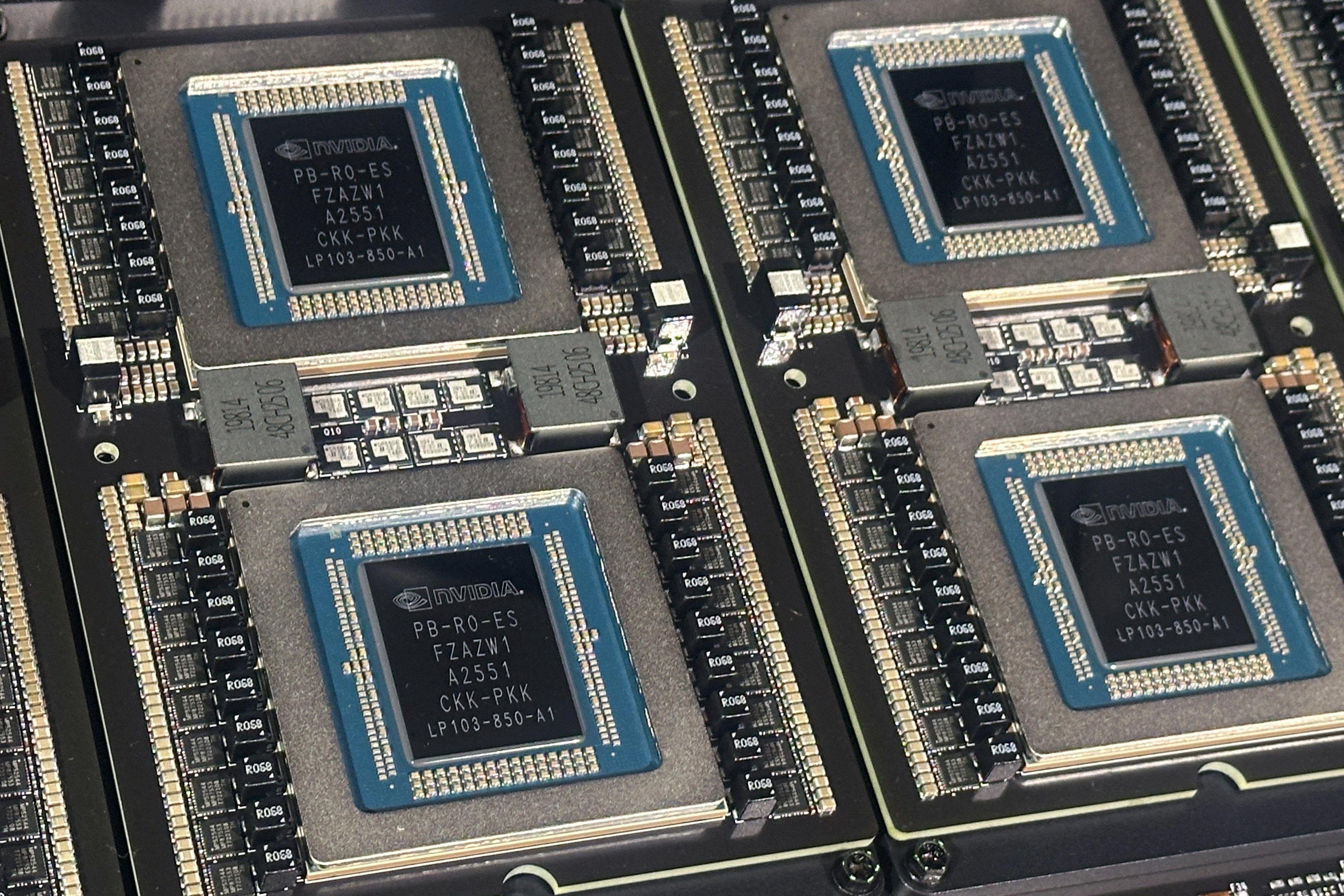

United States President Donald Trump’s administration has announced new restrictions on China’s access to advanced chips amid fallout from the alleged spy scandal involving AI giant Nvidia.
The rule announced by the Bureau of Industry and Security (BIS) on Monday aims to prevent Chinese AI developers from getting around export controls by remotely accessing data centres in third countries, particularly in Southeast Asia.
Recommended Stories
list of 4 items- list 1 of 4EU agrees to resurrect cooperation deal with Syria
- list 2 of 4Trump departs for ASEAN on summit with Xi and Putin
- list 3 of 4Paraguay ex-president moved to military jail amid special treatment reports
- list 4 of 4Ethiopia Moyale clashes disrupt livelihoods as territorial dispute deepens
It designates Indonesia, Malaysia, Singapore, Thailand and Brazil as countries with an “unacceptable risk of diversion” and requires anyone seeking to ship advanced chips to those destinations to obtain an export licence.
BIS, which sits under the Department of Commerce, said the change was a “logical extension” of the existing requirement for companies to obtain a licence to export or transfer chips to firms based in China.
“The United States is the global leader in advanced computing and super intelligence technology and is committed to promoting the global adoption of American technology for legitimate commercial purposes while ensuring that sensitive technologies are not exploited in ways that threaten US national security,” BIS said in a statement.
While Chinese firms are barred from importing the most advanced graphics processing units (GPUs) under US export controls, they had until now been legally able to take advantage of remote access to top-of-the-line computing power at data centres in countries such as Singapore, Malaysia and Thailand.
Singapore, which hosts dozens of data centres, said on Tuesday that it was “studying the details of this new measure carefully”.
“We are engaging affected companies to understand the potential impact on their businesses,” the Ministry of Energy, Trade and Industry and the Ministry of Digital Development and Information said in a joint statement.
“We have also been engaging the relevant US authorities on the scope and implementation of the measure, as well as exploring how to facilitate trusted access for Singapore companies.”
The ministries added that they did not condone companies using Singapore to “circumvent or violate” the laws of other countries.
The restrictions come as Nvidia’s export of advanced chips is under scrutiny following claims that former CEO Jensen Huang was romantically involved with a woman recruited by China’s Ministry of State Security for espionage.
Huang, who became one of the most prominent faces of the AI boom at the helm of Nvidia, resigned last week amid a company board investigation into allegations involving the Chinese-born executive of Singapore-based data centre company Megaspeed.
Beijing has denied the spying allegations, made by unnamed US officials in media reports, calling them “entirely groundless, speculative and intended to smear and malign China”.
Alice Huang, the former Megaspeed executive identified as Jensen Huang’s ex-romantic partner, has not publicly commented on the claims.
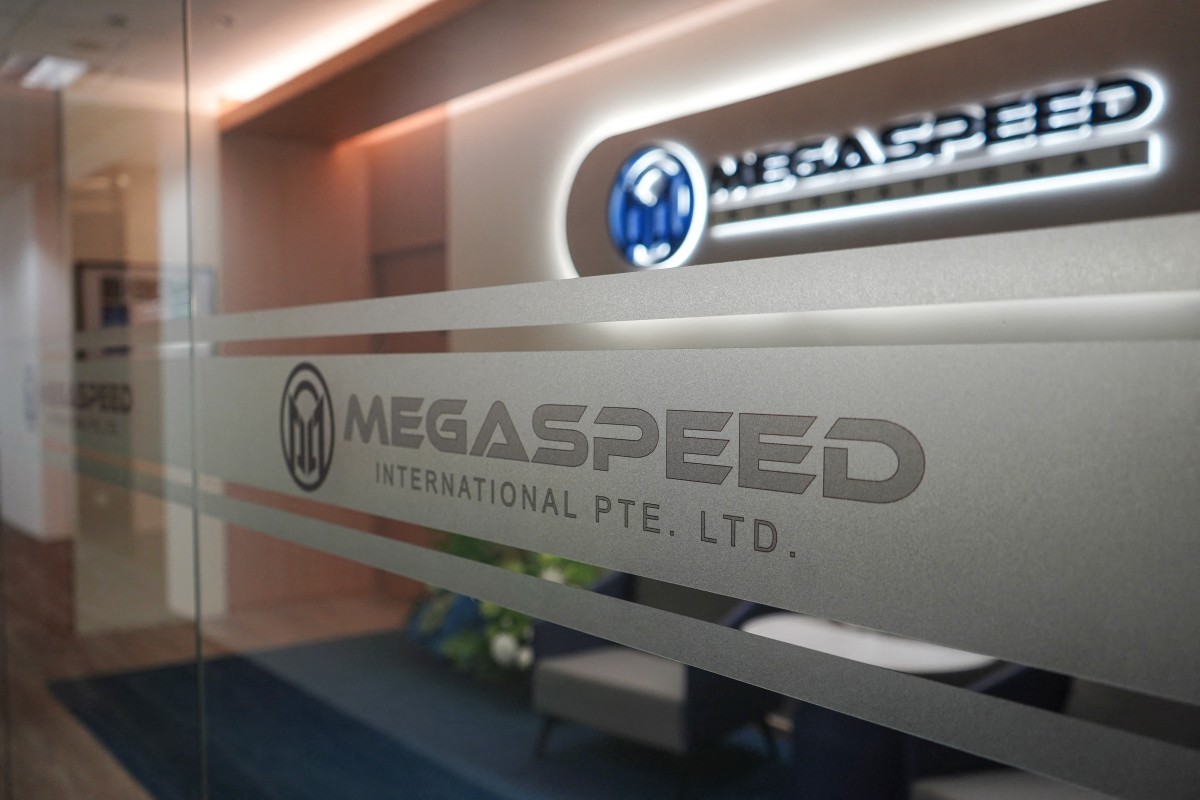
Late on Monday, the US Commerce Department and the Department of Justice publicly confirmed that investigators had opened a criminal investigation into Megaspeed.
The Commerce Department began investigating Megaspeed for potential export control violations in 2024, leading BIS officials to conduct an on-site inspection of the Singapore-based company and to interview Alice Huang the following year, the statement said.
The Justice Department subsequently took the “lead role” in the criminal investigation, according to the statement.
“The Department of Justice and the Department of Commerce’s Bureau of Industry and Security working together will bring the full extent of the law against Megaspeed for any criminal conduct that may have occurred,” it said.
US tech stocks fell sharply on Monday as investors weighed the scandal’s fallout on the AI rollout.
The tech-heavy Nasdaq Composite fell 2.5 percent, closing in the red for the third consecutive session.
The broader S&P 500 dropped 1.9 percent.
Shares of Nvidia, which have shed more than 30 percent of their market value over the past month, dropped 4.1 percent.
The other six companies of the “Magnificent Seven” also lost ground, with Alphabet and Amazon seeing the next-biggest declines of 4.1 percent and 3.3 percent, respectively.
The sell-off continued in Asia on Tuesday, with key indexes in Japan, South Korea and Hong Kong closing in the red.
Japan’s benchmark Nikkei 225 and South Korea’s Kospi closed down 1.3 percent and 2.6 percent, respectively, while the Hang Seng Index in Hong Kong dropped 0.9 percent.
