Powering towns on pig manure: How Denmark has transformed energy generation
Pigs are big business in Denmark. Now their waste is being turned into biogas, which powers the national grid.


As the world seeks to cut carbon emissions to slow global warming, livestock manure is driving Denmark’s energy transition.
Pigs are big business in the Scandinavian nation, accounting for a quarter of its food exports. There are as many as 12 million breeding pigs in the country at any one time – more than double the human population, and that ratio spirals if you account for 30 million more produced for slaughter and live export every year.
Managing pig and cattle waste has long been a significant challenge. According to the Danish Agriculture and Food Council, Denmark’s pig sector annually produces more than 17 million tonnes of manure, mostly liquid slurry, emitting considerable amounts of greenhouse gas in the form of methane and nitrous oxide.
However, Denmark has been engineering a biogas boom, developing facilities to convert livestock waste into renewable natural gas to power the national grid and transport, fuel homes and make fertiliser.
In just more than a decade, the country has upscaled a handful of small biogas operations into about 150 industrial-sized plants, with up to 70 percent of the processed raw materials coming from pig and cattle manure.
Today, Denmark has Europe’s highest share of biogas in its gas grid, at about 40 percent. And this has timely benefits, given the volatile oil and gas markets caused by the conflicts in Ukraine and Iran.
Project Zero
Sustainable fuel has been embraced on an industrial scale in the coastal town of Sonderborg in southern Denmark, boosted by an ambitious initiative called ProjectZero, which was established in 2007.
It aimed to create a carbon-neutral energy system by the end of 2029. So far, the combined use of renewables, industrial waste heat and biogas has cut energy-related carbon emissions by 79 percent.
“In a world marked by geopolitical uncertainty, energy has become an even more critical infrastructure,” ProjectZero CEO Allan Pilgaard-Jensen told Al Jazeera. “Societies need resilient, local energy solutions. ProjectZero is definitely about climate solutions, but it also helps give us energy independence.”
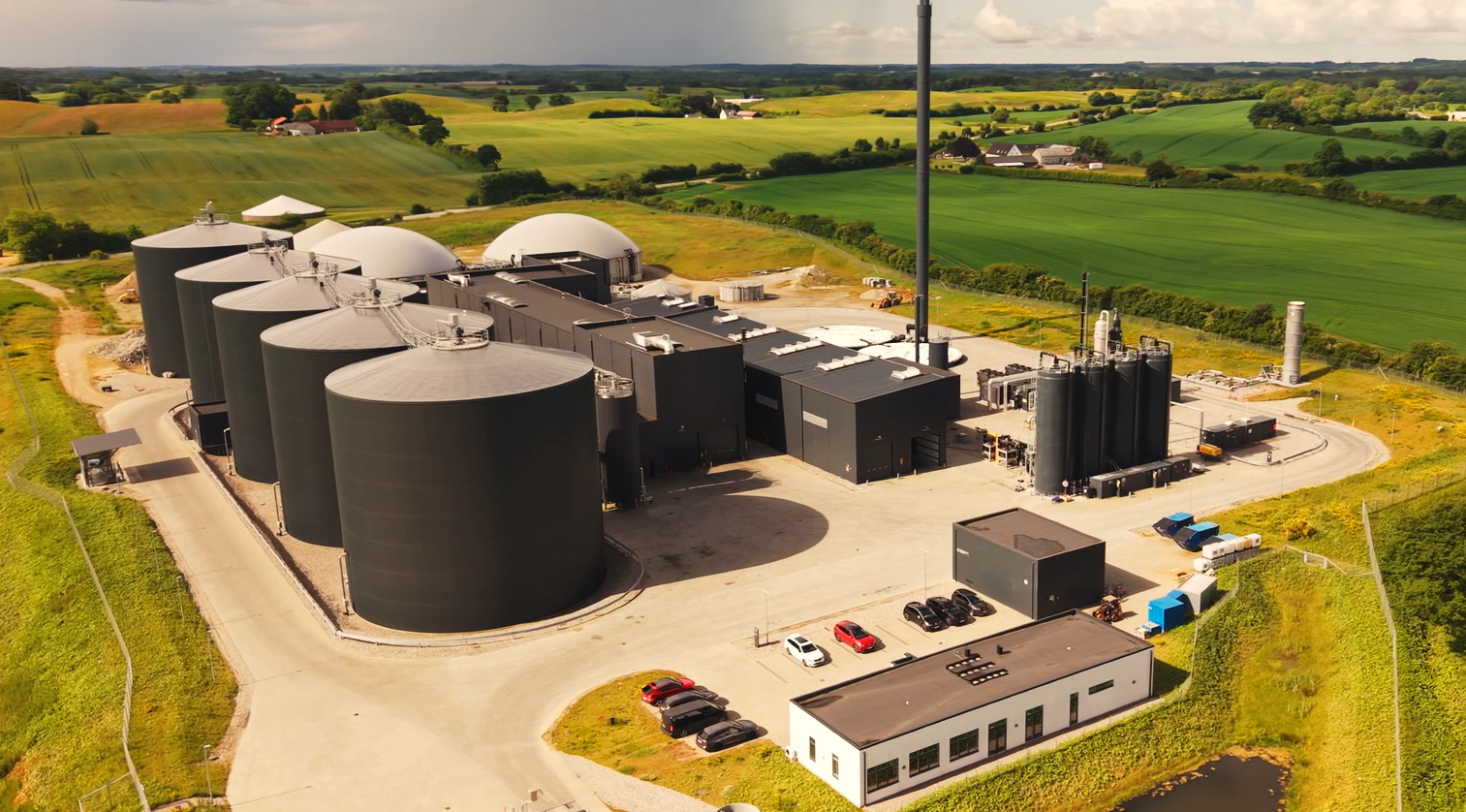
The large-scale Glansager and Kvaers biogas facilities in Sonderborg use approximately 850,000 tonnes of organic material annually, comprised primarily of livestock slurry supplemented by food waste and crop residues. Together, the two facilities produce enough biogas to cover all of the Sonderborg region’s annual gas demand.
A ‘factory farm trap’?
There are concerns about the reliance on livestock to provide the bulk of the organic input for the biogas plants, however.
A report by NOAH Friends of the Earth Denmark and Foodrise argues that the dependence on pig and cow manure is creating a factory farm trap that maintains high livestock numbers.
NOAH’s Jacob Sorensen said Denmark must reduce its number of pigs to tackle the climate crisis and to protect public health and biodiversity. “Denmark claims climate leadership, but its current biogas strategy is moving in the wrong direction,” he said.
“Biogas props up factory farming of pigs and locks in pollution rather than contributing to the necessary phasing out of the sector.”
Sorensen added that money spent on expanding biogas could be better used to fund emission-free energy solutions, “such as wind turbines, solar panels, geothermal heat and energy-saving technologies.”
Leading industry groups like Biogas Denmark counter, however, that biogas addresses immediate climate and energy security challenges and mitigates unavoidable agricultural emissions that will soon become an economic priority for farmers.
The ‘farmyard loop’ solution
In 2030, Denmark will become the first country to introduce a carbon tax on agriculture. Danish farmers will have to pay about 16 euros ($18) for every tonne of carbon dioxide they emit.
At Grasten Agricultural College near Sonderborg, new systems are being tested on a small scale which could reduce the potential toll on the farming community.
Students here walk to class among the livestock barns, tractor sheds and grain silos you’d expect to see on any farm. But here, too, a biogas plant helps power the college’s operations, as well as a state-of-the-art carbon capture unit that absorbs excess CO2, which would otherwise be emitted to the atmosphere when biogas is burned.
“For a long time, farming has been seen as part of the problem, and we would like to change that so that farming becomes part of the solution,” said college principal Bjarne Ebbesen.
“The students are learning and testing new ways of thinking about how to make agriculture sustainable and profitable,” he said. “We’re a kind of living laboratory to test how agriculture can reduce emissions.”
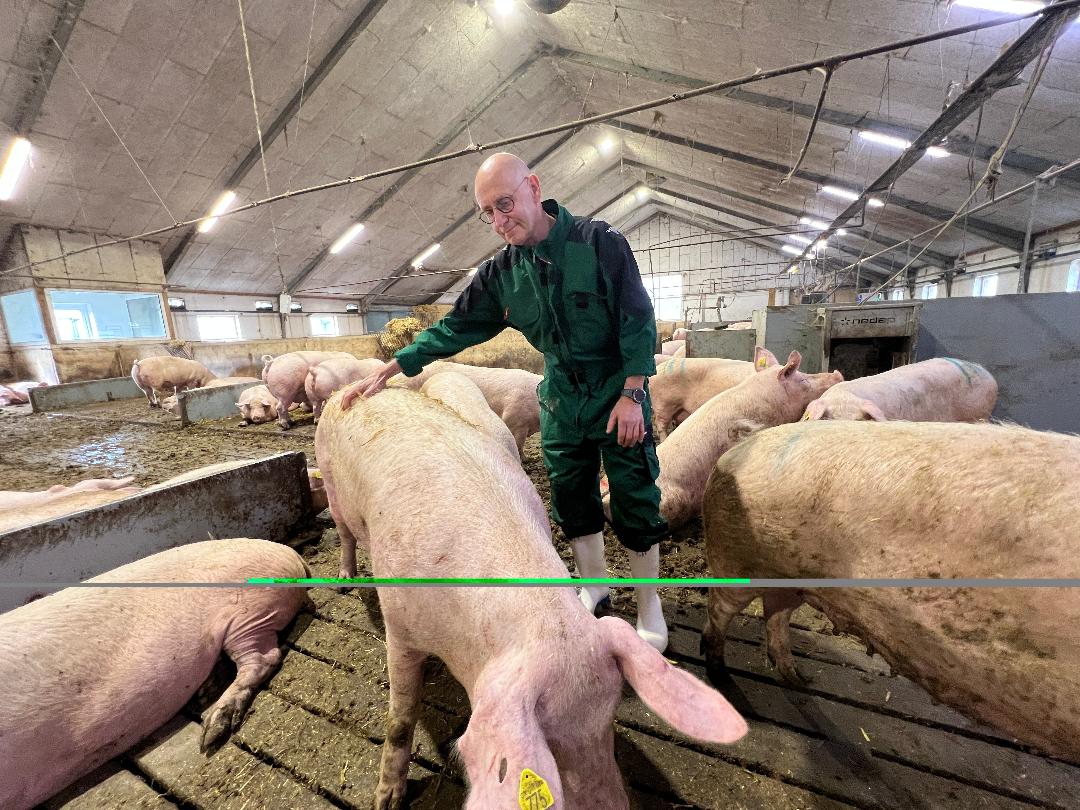
This is how it works: Manure from the farm’s 200 cows and 400 sows is fed into an on-site biogas plant where bacteria break it down to produce biogas. This biogas is then burned in gas engines to generate electricity for the farm and excess heat for the college buildings.
Instead of releasing exhaust CO2, produced during the biogas combustion, directly into the atmosphere, a small-scale capture unit extracts it from the flue gas and pipes it into an on-site storage tank. The CO2 can then be sold for industrial processes like beverage carbonation, refrigeration and food processing.
“Agricultural carbon capture can be scaled up across the country,” said Ebbesen. “And it then becomes a money-making opportunity. Carbon is being used in many different processes, so why shouldn’t farmers sell it as they sell milk, grain or meat?”
As critics point out, turning manure into fuel will not solve farming’s broader ecological carbon footprint. But it is evident in Sonderborg that the energy transition is not confined to wind turbines and solar panels. Here, the road to net zero is running straight through the farmyard, as slurry is turned into energy and carbon could become a marketable crop.
